American Civil War
It begins with the brutal enslavement of generations of free people until interrupted by the American Civil War.

It should be acknowledged that no matter how vivid or dramatic a story is, the average person cannot know the frisson of coming face-to-face with the combined naked power of suspects Atlanta corporate boardrooms, Atlanta City Hall and the Georgia State Legislature.
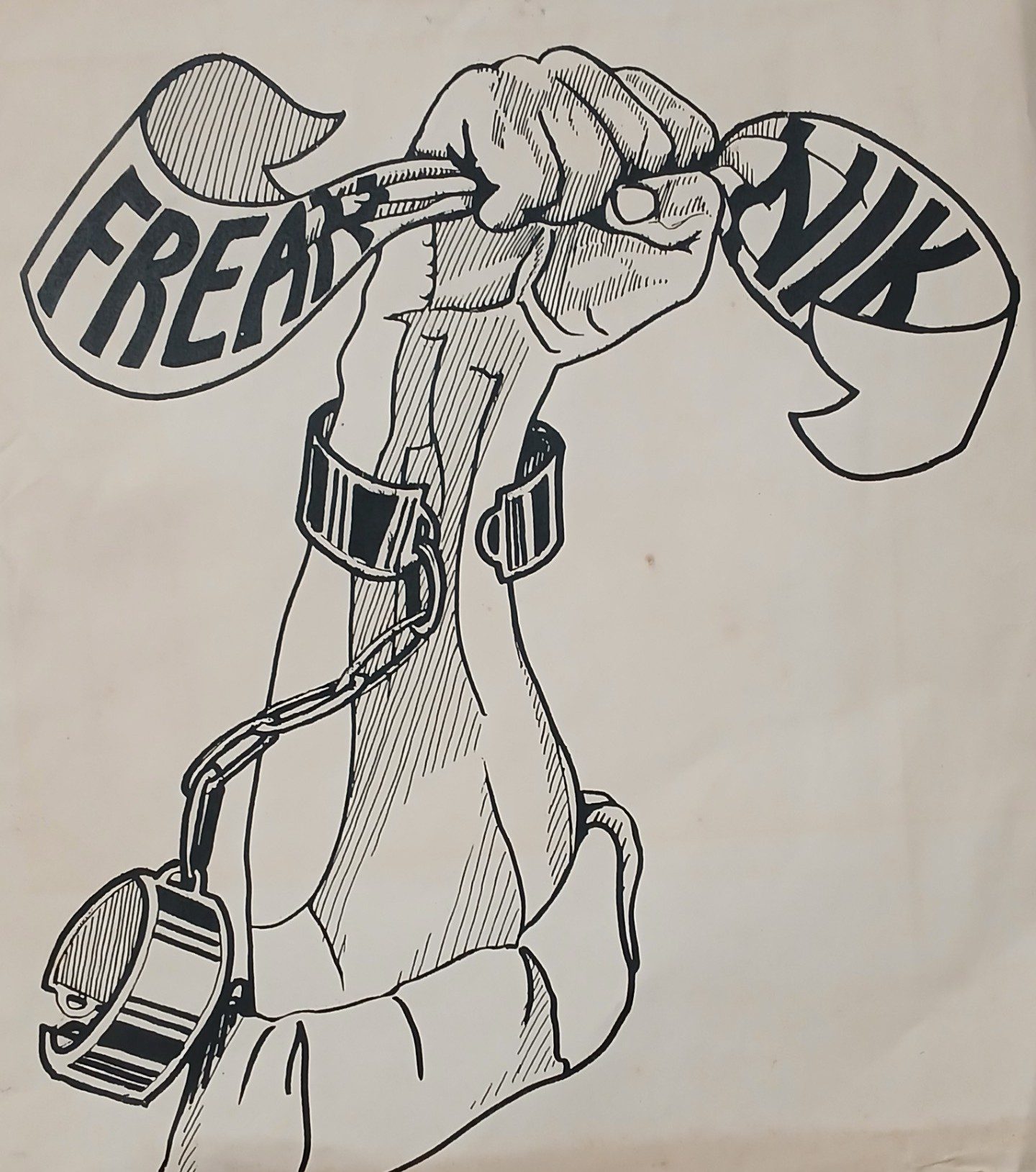
FREAKNIK’s troubles were retribution for demanding inheritance rights, bringing down the raft of the new/old southern hierarchy.
The descendants of the denied demanded and expected entitlement.

It was their blood-soaked inheritance from long-free labor. There is a cause-and-effect link between Freaknik, segregation, Civil Rights, and the history of Atlanta. The next generation of the civil rights movement wanted FREAKNIK. Instead, they got blasted by regentrification’s sabotage and distortion “smoking gun”.
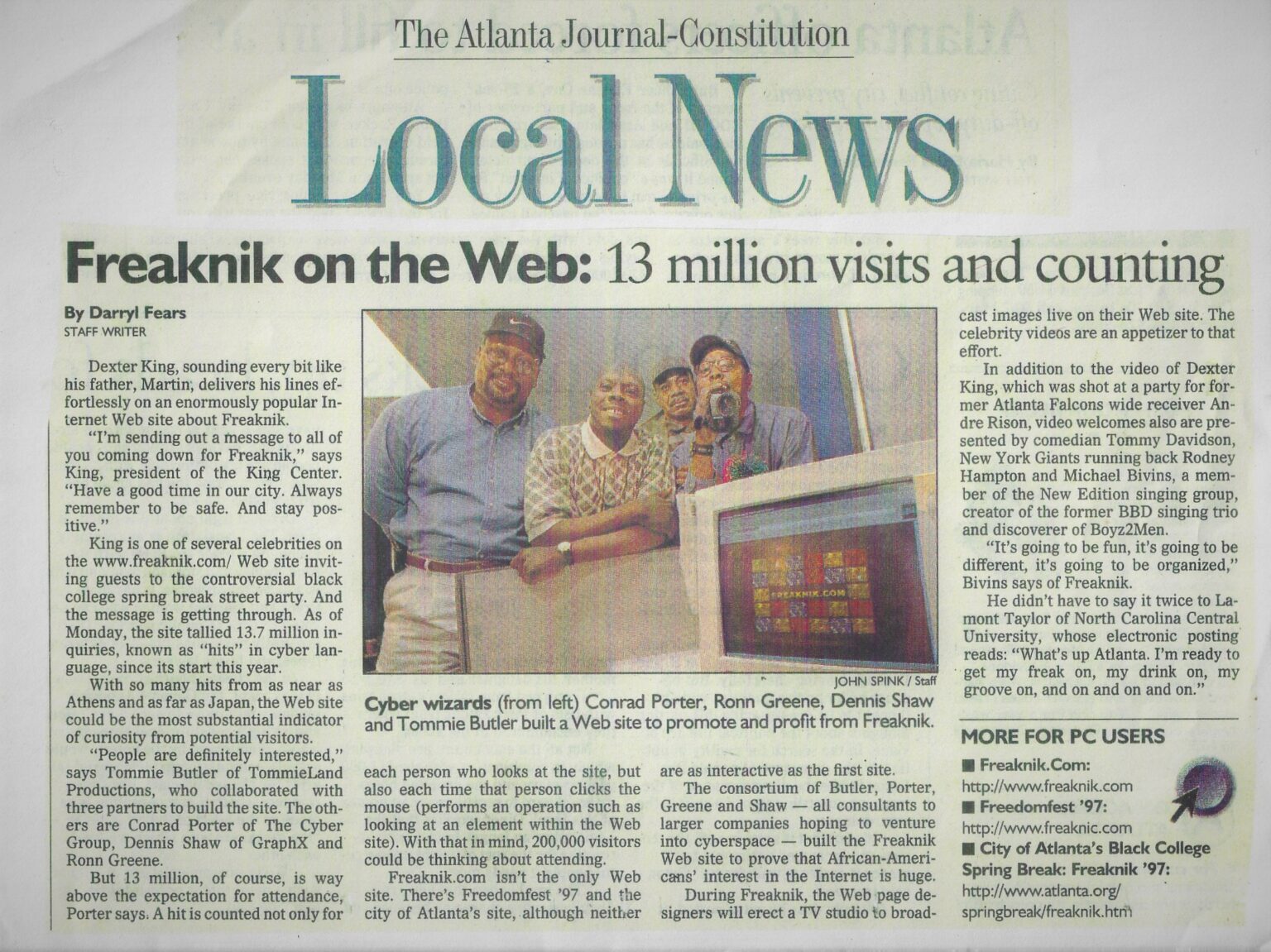
Any correct understanding of FREAKNIK requires understanding Atlanta in terms of race, elitism, and politics. It is a subplot to a complicated, otherwise alarming, fascinating, and shameful story. What began for Atlanta University students to be a way to make the best of being stranded in town over spring break. A 1970s free picnic party in a neighborhood park in the community. After that, a different group of students each year after year, adding to what became the popular, much-anticipated Freaknic into the beginning of 1990. 1994 it became a much bigger thing: “FREAKNIK,” a phenomenon that only happens in America. That transformation, while impressive, portended a threat to long-established politically and culturally colonial institutions in Atlanta and more excellent Georgia. The blowback is ominous.

It begins with the brutal enslavement of generations of free people until interrupted by the American Civil War.
After the Civil War, during the Reconstruction Period, a bloody massacre happened in Atlanta in 1915. Black people – men, women, and children — were attacked and murdered on the downtown streets of Atlanta.
It was on those same streets in the 1960s the American Civil Rights Movement began. After that, Black America appointed Atlanta the “Seat of The Civil Rights Movement.
1974 Maynard Holbrook Jackson Jr., Black American attorney and politician, was elected as the 54th mayor of Atlanta, Georgia, holding office from 1974 to 1982 and again the city’s 56th mayor in 1990. …
a brilliant young Black man, was elected Atlanta’s first Black mayor on October 16, 1974. His term wouldn’t begin until January 1975. Jackson started building modern Atlanta, transforming the sleepy state capital in the middle of a forest into a gleaming modern metropolis and building a world-class International Airport.
No other person in Georgia had, before or since, conducted all Maynard Jackson did at one time. Jackson also created one of America’s most potent voting block coalitions, Black civil rights activists, and committed white liberals.
In approximately 1978, during spring break, a group of stranded Black college students organized a free picnic party in a park in the Black neighborhood over the third weekend in April, then named it “Freaknic.”
Learn More
Regentrification is the movement of elitism economics as it sweeps across urban cityscapes in the United States, including up and down the East and West coasts.
Learn More
Its focus merged with developing social fissures, fracturing the political coalition, and mishandling the rapidly evolving Freaknic. From 1992 to 1994, the event organically grew to be the most significant gathering of young African Americans in Atlanta since the civil rights movement.
Learn More